
Americans Buying Property in Turkey — Complete 2026 Guide

Americans Buying Property in Turkey — Complete 2026 Guide
Legal process, FATCA rules, wire transfer from US banks, and the E-2 visa advantage — everything American buyers need to know
Legal ✓Americans CAN Buy $400,000Citizenship Threshold No BlockFATCA on Purchase E-2 VisaUS Investor AccessTurkey has quietly become one of the most compelling real estate markets for American buyers — yet most US investors don't know where to start. Can Americans legally buy? What about FATCA and the IRS? How do you wire money from a US bank? And what does Turkish citizenship have to do with the US E-2 investor visa?
This guide answers every question American buyers ask before purchasing property in Turkey in 2026.
ℹ️ Informational Disclaimer This article is for informational purposes only and does not constitute legal, tax, or financial advice. Always consult a licensed attorney and qualified tax advisor before making any real estate or investment decisions.Can Americans Buy Property in Turkey?
Yes — fully and legally. The United States and Turkey have no restrictions preventing American citizens from purchasing real estate in Turkey. Unlike markets such as New Zealand or parts of Scandinavia, Turkey's property market is entirely open to US nationals on the same terms as most other foreign buyers.
Americans can purchase apartments, villas, commercial units, and citizenship-eligible properties with 100% freehold ownership. The process is well-established, English-language legal support is widely available, and thousands of American buyers have successfully completed purchases in Istanbul, Antalya, and Bodrum.
🏠 Homes of Turkey Tip Every listing in our citizenship-eligible portfolio is verified for clean title, correct USD valuation, and full legal compliance with 2026 program requirements. Browse verified listings →Why American Buyers Choose Turkey in 2026
American buyers approach Turkey with three main motivations — and the market serves each one exceptionally well.
💵 USD Purchasing Power
The Turkish lira has depreciated significantly against the dollar over the past decade. Your dollars buy substantially more square footage in Istanbul today than five years ago — often 2–3× more than equivalent Spanish or Portuguese cities.
🛂 Turkish Citizenship + E-2 Visa
A qualifying $400,000 purchase unlocks a Turkish passport. Turkish citizens can apply for the US E-2 investor visa — a route unavailable to most other nationalities and a major strategic advantage for American entrepreneurs.
📈 Rental Yield & Appreciation
Istanbul and Antalya consistently produce rental yields of 6–10% annually — well above typical US REIT returns. Bodrum properties have appreciated over 300% in the past five years in USD terms.
🌍 No Residency Requirement
Unlike Portugal's Golden Visa or Spain's residency requirements, Turkish citizenship by investment requires no minimum stay. Buy, hold for 3 years, and live wherever you want.
Legal Framework: How Property Ownership Works for Americans
Title Deed (TAPU)
Turkish property ownership is registered in the national land registry system called TAPU. When you purchase property in Turkey, your name is inscribed directly on the title deed — there are no leasehold workarounds, nominee structures, or time limits. Ownership is absolute freehold and transferable to your heirs.
Foreign Exchange Purchase Certificate (DAP)
This is one of the most important documents for American buyers specifically. All international property purchases in Turkey must be paid via wire transfer routed through the Turkish Central Bank system. This generates a Foreign Exchange Purchase Certificate (Döviz Alım Belgesi), which:
- Proves the funds originated from abroad
- Is required for the Turkish citizenship application
- Protects your legal right to repatriate the full proceeds when you eventually sell
Military Clearance — No Longer Required
Historically, foreign buyers needed military clearance confirming the property was not in a restricted zone. This requirement was removed for most nationalities including Americans in 2012. Today your notary and TAPU office handle all standard checks automatically.
2025–2026 Updates American Buyers Must Know
⚠️ Recent Rule Changes Physical presence is now required for citizenship applicants (a short visit of a few days is sufficient — you do not need to live there). Spouses must now also obtain a separate residence permit. Criminal record certificates required for both applicants. YUVAM accounts are discontinued. Land-only purchases no longer qualify for citizenship since December 2023.Step-by-Step: How American Buyers Purchase Property in Turkey
1 Engage a Verified Real Estate Agency
Work with an agency that understands citizenship eligibility requirements, USD pricing, and the documentation chain American buyers specifically need — not just a general property market agent.
2 Obtain a Turkish Tax ID
Required before any financial transaction. Takes under an hour at any Turkish tax office and can often be arranged remotely via power of attorney by your agent before you arrive.
3 Open a Turkish Bank Account
Required to route your wire transfer through the Central Bank and generate the DAP certificate. Most major Turkish banks (Ziraat, Garanti BBVA, İş Bankası) serve international clients in English.
4 Wire Transfer from Your US Bank
Transfer USD from your US account. Your Turkish bank converts to TRY and issues the mandatory DAP certificate. Budget 2–4 business days for international wire clearing. Have your purchase agreement ready — your US bank may request it.
5 Commission an Official CMB Valuation
A Capital Markets Board-licensed appraiser must produce the valuation report. Citizenship eligibility is based on the valuation figure, not the sales price — this distinction is critical.
6 Complete the Purchase & Register the Title Deed
The 3-year no-sale annotation is placed on the deed at this stage. Both parties (or their authorized representatives) must be present at the TAPU office.
7 Apply for Residence Permit & Citizenship
Both the main applicant and spouse must be physically present in Turkey for fingerprinting. After government approval, your Turkish passport and national ID are issued within 2–4 weeks.
FATCA and IRS Reporting for US Property Owners in Turkey
This is the number-one concern of American buyers — and the answer is more reassuring than most people expect.
Does Buying Turkish Property Trigger FATCA?
No. Direct foreign real estate held in your personal name is not a foreign financial account under FATCA rules. It is not reported on FBAR (FinCEN 114) or Form 8938, as long as you hold the property personally and not through a foreign entity such as a Turkish LLC.
What You Do Need to Report to the IRS
| Tax Situation | Turkey Treatment | US IRS Reporting |
|---|---|---|
| Property purchase | 4% title transfer tax (Tapu harcı) | No filing required |
| Annual rental income | Taxed locally (progressive bands) | Yes — Schedule E on Form 1040 |
| Capital gains (held < 5 yrs) | Taxed in Turkey as income | Yes — Form 8949 + Schedule D |
| Capital gains (held ≥ 5 yrs) | Exempt in Turkey | Still reportable to IRS |
| Property held personally | — | No FBAR / Form 8938 required |
| Property held via Turkish LLC | — | May trigger Form 5471 / 8865 |
Turkey-USA Double Taxation Treaty
Turkey and the United States have a bilateral tax treaty that prevents you from being taxed twice on the same income. Any Turkish income tax or withholding you pay on rental income can typically be credited against your US tax liability via Form 1116 (Foreign Tax Credit). Consult a CPA specializing in expat taxation for your specific situation.
🏠 Homes of Turkey Tip We connect American buyers with English-speaking Turkish attorneys and US expat CPAs who specialize in cross-border real estate transactions. Ask us in your free consultation. Schedule a free call →The E-2 Visa Advantage — Why This Matters for American Buyers
Turkey is one of approximately 80 countries with an E-2 treaty investor visa agreement with the United States. This means Turkish citizens can apply for the E-2 visa to live and work in the USA through a business investment — without a green card or diversity lottery.
Most Caribbean citizenship programs (St Kitts, Dominica, Grenada) and even Malta do not have an E-2 treaty with the US. This makes Turkey's citizenship-by-investment program uniquely valuable for American entrepreneurs and investors operating between both countries.
Step 1
Invest $400K in Turkish property → obtain Turkish citizenship (4–8 months)
Step 2
Hold both US and Turkish citizenship — no renunciation required, Turkey allows dual nationality
Step 3
As a Turkish national, apply for the US E-2 investor visa for a US business investment
Step 4
E-2 is renewable indefinitely — spouse and children receive dependent status with US work authorization
Total Costs: What American Buyers Should Budget
Minimum qualifying investment$400,000 Title deed transfer tax (Tapu harcı)~4% of declared value VAT (KDV) — first-home buyers may be exemptVaries by property Official CMB valuation report$300–$600 Legal and notary fees$1,500–$3,000 Residence permit (investor program, per person)~$5,000 Document translation and apostille$500–$1,500 Total additional costs (estimate)5–7% above property valueFrequently Asked Questions — American Buyers
Can Americans own 100% of a property in Turkey?
Do I need to visit Turkey to complete the purchase?
Can I get a mortgage from a US bank for Turkish property?
Does buying Turkish property trigger FATCA reporting?
Can I rent my Turkish property on Airbnb?
What happens after the 3-year citizenship holding period?
Which nationalities are excluded from the Turkish citizenship program?
Ready to Start Your Turkish Investment Journey?
Our team specializes in helping American buyers navigate Turkish real estate — from property selection through passport delivery. USD pricing, English-speaking legal support, and full FATCA-aware guidance included.
Browse Eligible Properties Free Consultation Disclaimer: Last updated May 2026. This article is for informational purposes only. Requirements are subject to change without notice. Always verify current regulations with a licensed legal advisor before making any investment or application decisions. Homes of Turkey is a real estate agency and does not provide legal, tax, or citizenship advice.Related Articles
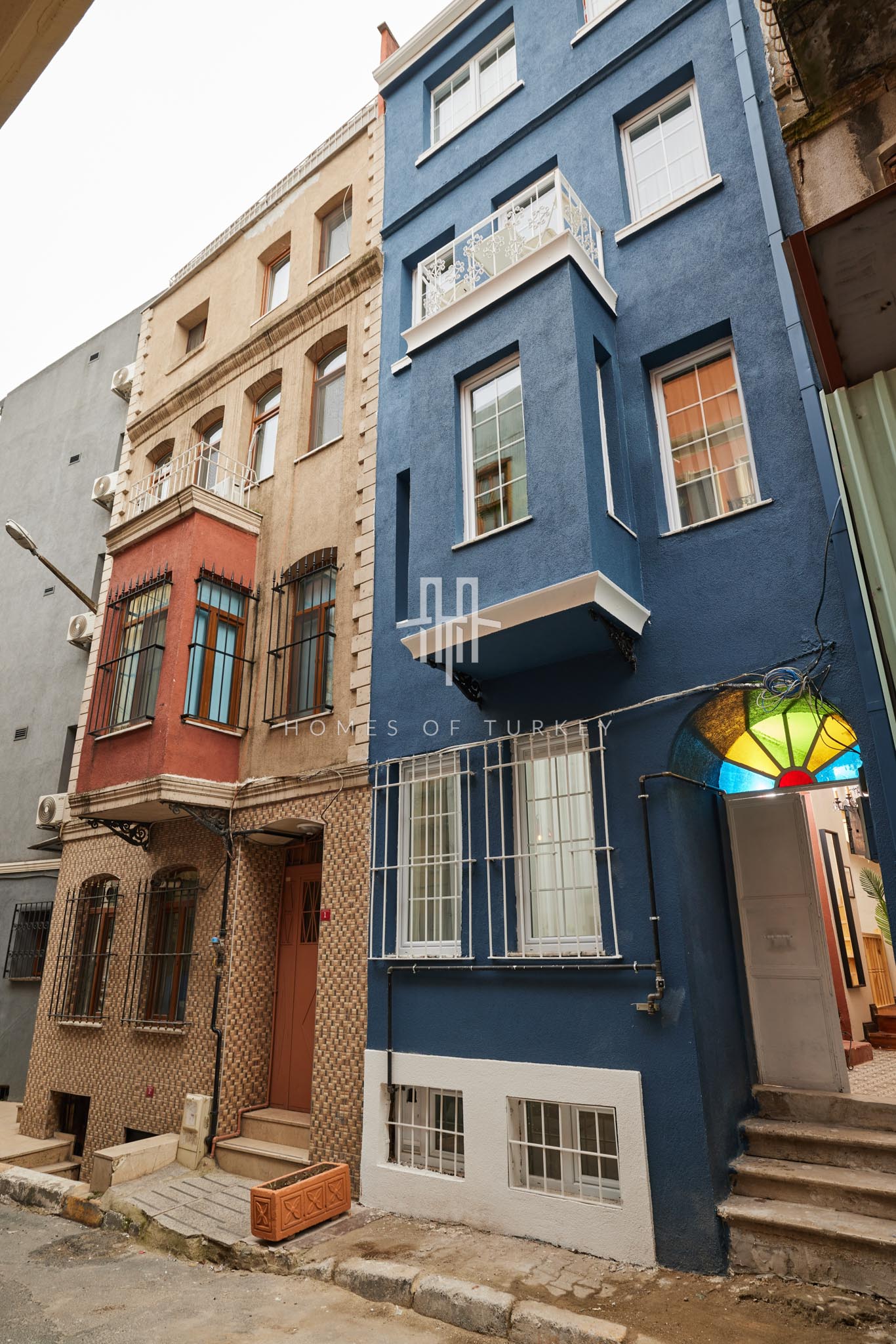
How to Buy Property in Turkey as a Foreigner (2026): Step-by-Step Guide
Foreign nationals can buy property in Turkey in their own name, with full freehold ownership, and the entire process ca…
Read more →
Turkish Citizenship by Investment 2026: The $400,000 Property Guide
You and your family can obtain Turkish citizenship by investing a minimum of $400,000 in real estate and holding it for…
Read more →
Best Areas to Invest in Istanbul Real Estate (2026)
For 2026, the strongest Istanbul investment districts combine new infrastructure, rental demand and room for price grow…
Read more →